
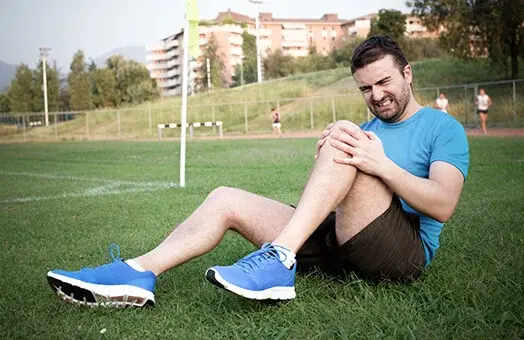
If you live in Suwanee and your knee has started talking to you every time you walk the boardwalk at Suwanee Creek Greenway or carry groceries in from the car, you are far from alone. Knee pain is one of the most common complaints in primary care offices across Georgia, and for a lot of people, it does not just go away on its own. It lingers. It flares up after an afternoon at George Pierce Park, settles down for a few days, and then shows up again right when you thought rest and a little ice had taken care of it. If that cycle sounds familiar, there is a reason it keeps repeating, and it usually has nothing to do with anything you are doing wrong.
Just How Common Is Knee Pain, Really?
Knee pain is far more widespread than most people realize. Research shows that roughly 25 percent of adults over the age of 45 in the United States report frequent knee pain, and the lifetime risk of developing symptomatic knee osteoarthritis sits at about 45 percent. Women are affected more often than men, with some studies reporting a prevalence ratio close to 1.7 to 1. Prevalence climbs sharply with age as well, reaching close to 50 percent in adults over 75. Knee pain alone accounts for an estimated 4 million primary care visits every year in the U.S. and is considered the single most common musculoskeletal complaint in primary care, making up roughly 33 percent of all musculoskeletal consultations. Its overall prevalence has also increased by nearly 65 percent over the past two decades, a trend researchers tie largely to an aging population and rising rates of obesity.
None of that is meant to alarm you. It is meant to show you that if your knee pain has not gone away, the problem usually is not that you are doing something wrong. The problem is that the underlying cause was never actually identified or addressed in the first place.
Why the Pain Keeps Coming Back
Knee pain rarely shows up for just one reason. For most adults in Suwanee, it traces back to a combination of factors that build on each other over time:
- Osteoarthritis, where the cartilage that cushions the knee joint gradually wears down, leaving bone closer to bone with every step
- Old injuries or meniscus tears that never fully healed, even if the original injury happened years ago
- Years of repetitive stress from work, sports, or simply staying active around an area as walkable as Suwanee
- Extra body weight, which research links to a fourfold increase in knee pain risk compared to a normal body weight, since every additional pound adds multiplied force across the joint with each step
- Weak supporting muscles around the hip and knee, which changes how the joint absorbs impact and shifts strain onto structures that were never designed to handle it alone
The tricky part is that knee pain caused by cartilage breakdown does not heal the way a pulled muscle does. Cartilage has very little blood supply of its own, so the body cannot repair it the same way it repairs skin or soft tissue. That single fact explains why so many people feel like they have tried everything and still feel stuck.
Why Rest, Ice, and Pain Relievers Often Stop Working
In the early stages, rest and over the counter pain relievers genuinely help. But for a lot of people, that relief becomes less reliable over time. You take fewer walks, you skip a few workouts, and the muscles around the knee get weaker as a result, which puts even more strain on the joint itself. It becomes a slow, quiet cycle: less activity leads to less strength, less strength leads to more pain, and more pain leads to even less activity. Anti inflammatory medications can quiet the pain for a while, but they are not designed to rebuild tissue or correct the mechanical issue underneath it, and long term use carries its own risks to the stomach and kidneys that most people are not told about. Eventually, the same activities that used to feel fine, gardening, climbing stairs, walking the dog around the neighborhood, start to feel like a gamble rather than a normal part of the day.
Simple Steps That Can Genuinely Help
While a proper evaluation is the most reliable way to deal with ongoing knee pain, a few habits can meaningfully reduce strain on the joint in the meantime. Low impact activities like swimming, cycling, or using an elliptical keep the knee moving without the repeated jarring impact of running or jumping on pavement. Strengthening the muscles around the knee, especially the quadriceps and glutes, helps the joint absorb force more efficiently, since weak supporting muscles are one of the most common reasons knee pain turns into a cycle instead of a one time event. Even modest weight loss makes a measurable difference: research on joint loading suggests that losing roughly 10 pounds can reduce cumulative force on the knee by several times that amount with every step taken. Supportive footwear and avoiding long stretches on hard surfaces like concrete also help reduce daily irritation, which matters most for anyone who spends a lot of time on their feet at work or around the house.
These steps will not fix a torn meniscus or reverse cartilage that has already broken down, but they can meaningfully reduce how much the joint is asked to deal with every day, which often makes the difference between pain that stays manageable and pain that keeps getting worse over time.
What’s Actually Helping People Find Relief
Treatment for ongoing knee pain has shifted quite a bit over the past several years. Instead of jumping straight to long term pain management or surgery, physician guided, non surgical approaches are increasingly being used to address the joint itself rather than simply masking the symptoms. A thorough evaluation typically starts with a hands-on assessment and imaging review to understand exactly what is driving the pain, followed by a treatment plan built around that specific finding rather than a generic recommendation.
That plan may include regenerative options such as PRP, where a concentration of platelets drawn from a patient’s own blood is used to support the body’s natural healing response in and around the joint, or stem cell based therapy, which works on a similar principle using cells intended to help repair damaged tissue. Shockwave therapy is another option, using focused acoustic energy to stimulate blood flow and tissue repair in areas that have not responded to more conservative care. Some patients do well with a single approach, while others benefit from a combination, depending on how advanced the joint changes are. There is more detail available on knee pain relief treatment options and who tends to be a good candidate for each one.
It is also worth noting that regenerative treatments are not a guaranteed cure, and results vary from person to person depending on the severity of the underlying joint changes. Some of these procedures are still considered investigational for certain conditions and may not be covered by insurance, which is worth confirming directly with a provider before moving forward. For the right candidate, though, they offer a more targeted alternative for people who have already tried rest, medication, or physical therapy without lasting results.
Is This the Right Path for You?
Not everyone with knee pain needs the same plan, and that is exactly the point of a proper evaluation. Someone in their 40s with early cartilage changes from years of running is a very different case than someone in their 70s with advanced osteoarthritis, or someone recovering from a meniscus tear that happened on a basketball court a decade ago. Factors like how long the pain has lasted, what imaging shows, your activity goals, and what you have already tried all play a role in deciding which combination of approaches makes the most sense for your specific knee.
What a Thorough Evaluation Should Include
A proper evaluation for ongoing knee pain should go beyond a quick look and a prescription. It typically includes a review of any existing imaging, a hands-on assessment of how the knee moves and bears weight under different conditions, and a clear conversation about how long the pain has lasted and what has already been tried without success. There is no one size fits all answer here. A patient with early stage cartilage wear needs a different approach than someone recovering from an old sports injury, and a good evaluation is built to reflect that distinction rather than applying the same recommendation to everyone who walks in with knee pain.
When Knee Pain Needs More Urgent Attention
Most knee pain is not an emergency, but a few signs are worth paying attention to: a knee that suddenly swells, locks, or gives way underneath you, pain that follows a clear injury or fall, or pain that wakes you up at night on a regular basis. If any of that sounds familiar, it is worth getting evaluated sooner rather than later, since waiting often gives the underlying issue more time to progress and can narrow the range of options available later on.
Finding Lasting Knee Pain Relief in Suwanee, GA
Knee pain that sticks around for months is not something you have to accept as permanent, and it does not always mean surgery is the next step either. The most reliable path forward is identifying the actual cause through a proper evaluation rather than continuing to manage symptoms indefinitely. For residents in the Suwanee, GA area, Restore Spine & Joint Center is one resource offering physician guided, non surgical evaluations for ongoing joint pain, which can help clarify exactly what is driving the discomfort and what realistic options actually look like from there.